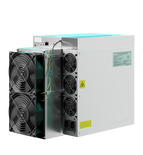
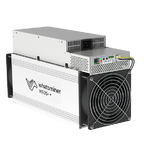
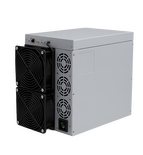
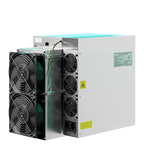
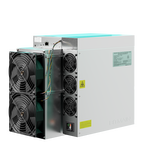
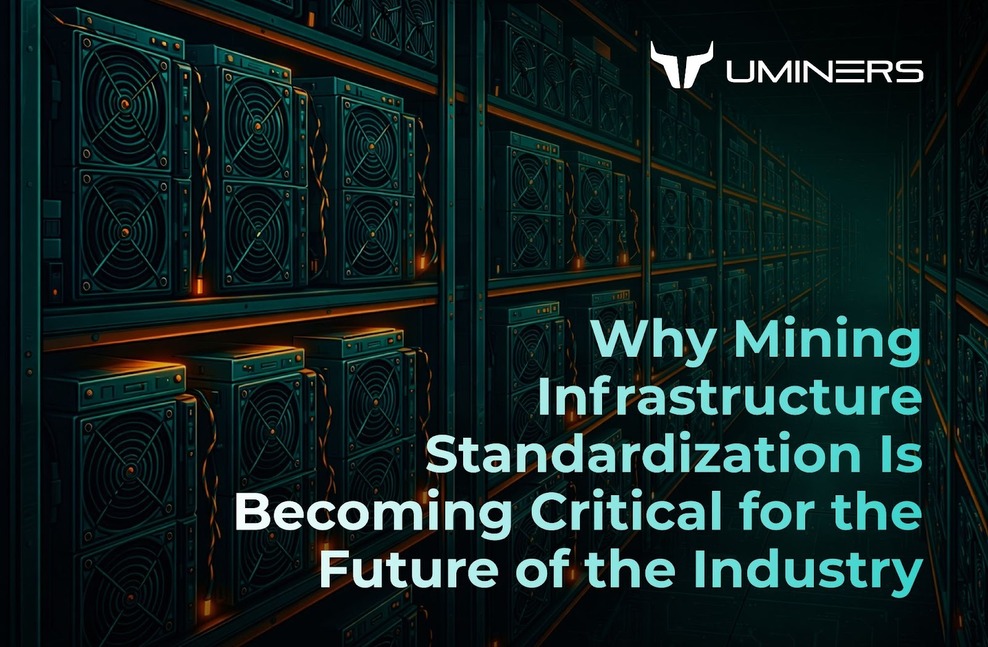
Today the hardware market has evolved into a set of separate “individual” ecosystems. Each major manufacturer develops its own standards for form factors, cooling systems, and infrastructure requirements. For those building their own facilities, this becomes a significant challenge.
The industry is now mature enough to realize that without infrastructure standardization, it cannot move forward.
2U Unit Standard: Industry Has Determined the Direction Itself
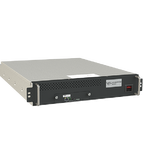
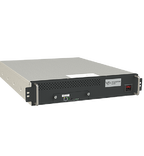
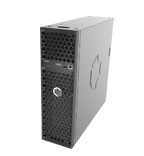
2U in the context of mining equipment refers to the form factor defined by the rack unit standard.
What do 2U-miners mean?
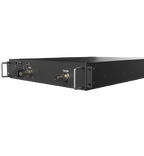
If a miner has a 2U form factor, it means:
- It is designed for installation in a standard 19-inch server rack.
- Its height is ~ 3.5 inches.
- Such equipment typically features a server-grade design, improved modularity, efficient airflow, and the ability to be densely deployed in data centers.
2U is the de facto new industry standard
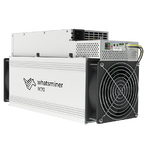
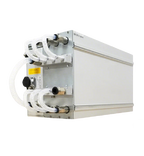
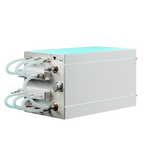
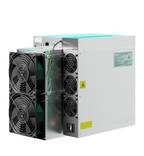
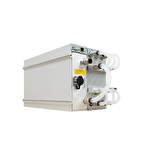
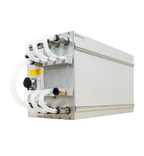
There are manufacturers who have already understood where the market is heading and produce hardware only in a standardized 2U format:
- Whatsminer
- Bitdeer
- Avalon
- Volcminer
- Elphapex
And because of this standard, their equipment:
- Fits better into industrial-scale mining facilities with rack-based infrastructure;
- Simplifies standardization and large-scale deployment;
- Enhances cooling efficiency and maintenance;
- Enables better power density optimization (kW per rack).
Why is it important?
One of the most crucial moments is that the 2U standard inherits a well-established server ecosystem: established manufacturers, ready-made technologies, rack systems, cabling, CDUs, liquid-cooling components, airflow, and service regulations. It is a clear, scalable, and well-understood infrastructure for any data center.
And most importantly, it provides freedom and flexibility, as well as potential support for AI workloads.
Infrastructure is one. Equipment changes. That’s what a mature industry looks like.
Bitmain Is Following Its Own Path
When discussing mining hardware, it’s impossible not to mention Bitmain. The manufacturer remains a key technological leader in the industry, consistently setting a high benchmark for performance and efficiency.
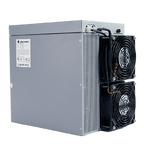
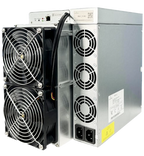
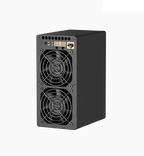
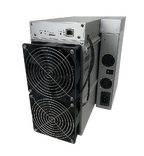
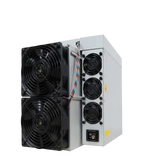
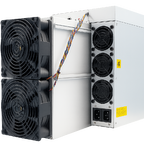
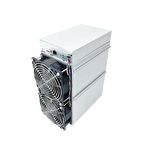
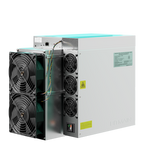
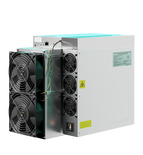
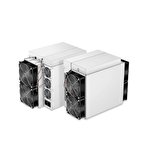
The company does not align its equipment to a single unified standard. Instead, it follows its own engineering approach, offering a lineup with multiple form factors. At the moment, Bitmain does not have a fully standardized 2U product series. The manufacturer continues to develop several parallel directions: specialized solutions (“Hydro solutions”) and 3U and 6U water-cooled hardware for different algorithms. Currently, one upcoming 2U model is being prepared for release - L11, built on the Scrypt algorithm.
Single-Manufacturer Infrastructure
When choosing a manufacturer that does not follow a unified standard, an owner of a facility:
- ties the project and infrastructure to a particular engineering ecosystem;
- gets less flexibility to switch between algorithms;
- reduces the opportunity for risk diversification.
In 2025, these limitations must be assessed in advance. Mining infrastructure is a long-term investment of hundreds of thousands, or even millions, of dollars, and its adaptability becomes critically important.
Why Does the Industry Need Unification Right Now?
Mining has long evolved from “buy and plug in” into a full-scale energy-infrastructure business, where hardware is just one of the consumables. When infrastructure is not universal, every transition - to a new standard, new algorithm, new generation hardware, etc. - turns into a construction project.
And unification can solve multiple challenges at once:
- Reduce CAPEX;
- Lower OPEC;
- Accelerate facility deployment;
- Simplify maintenance;
- Enable flexible hardware replacement;
- Remove dependence on a single manufacturer;
- Create a pathway toward AI-computing integration.
Unified infrastructure isn’t just a convenience; it is a new level of strategic flexibility.
The transition to 2U today means a facility can be rebuilt within weeks by simply replacing hardware in the racks, rather than spending years on reorganization. Owners are no longer limited by a single vendor's decisions. They manage the facility as a computational center that outlives any single ASIC generation.
Unification cannot be stopped. It is already happening - and it is being shaped by some of the strongest players in the industry.