
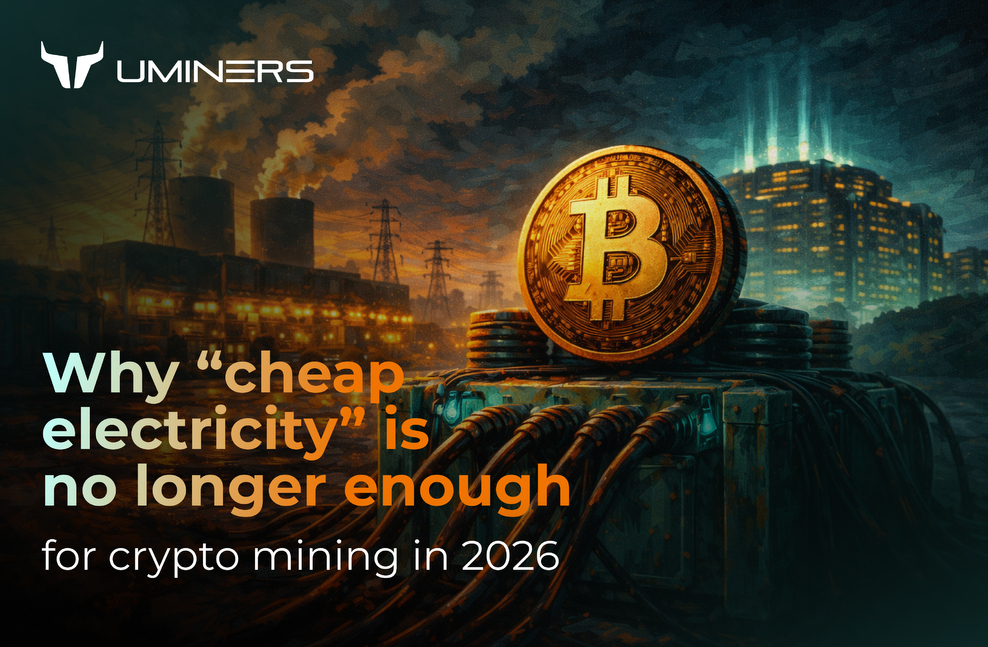
In the past, every conversation about crypto mining started with one sentence: “You need cheap electricity.”
If you found a rate of a few cents per kWh, everything else — geography, regulation, grid capacity, infrastructure — was considered secondary and could be fixed later.
Today Price ≠ Access to Power
In modern energy systems, electricity price and actual power availability are two completely different things. They rarely match anymore.
You can be in a region with a formally low tariff and still have no real chance to connect. Long queues for technical conditions, overloaded networks, transformer and substation limits, seasonal restrictions, and bureaucratic delays make the connection itself uncertain.
In these conditions, a cheap kilowatt-hour remains only a theoretical number that has nothing to do with your real mining project.
The Grid Sells Time, Not Just Energy
Power systems now sell not only kilowatt-hours but also time. Connection timelines have become the critical economic factor.
When you wait years and rules keep changing during the process, the cost per kWh loses all meaning. The investor pays for waiting, for frozen capital, and for the risk that the connection will never happen.
Why Restrictions on Mining Appear
Bans and limits on crypto mining are often seen as political or ideological decisions. In practice, they are almost always about dispatch priorities.
During shortages or peak loads, the system must choose which consumers are more important. Households, heating, and core industry have social and political priority. Crypto mining does not — it is easier to disconnect and harder to defend publicly.
Paradoxically, regions with the cheapest electricity often become zones of restrictions first. Low tariffs attract load faster than the grid can adapt, creating conflict between demand and infrastructure.
Regulation Is No Longer “Noise”
Regulation is no longer an external inconvenience that can be ignored. Even with cheap generation, the absence of a clear legal framework turns any project into a constant source of risk.
This risk cannot be offset by low electricity prices. It shows up as shutdowns, inspections, and sudden rule changes.
Renewables Do Not Solve the Cheap Power Problem
The idea that renewable energy (solar/wind) automatically delivers cheap power for crypto mining turned out to be an oversimplification. Zero and negative prices during renewable generation usually appear not because of real surplus, but because of grid limitations.
Power is generated, but the system cannot accept or distribute it. Cheap generation without proper grid architecture does not become cheap energy for mining.
Moreover, renewables require extremely high upfront capital costs. Design, equipment, construction, and connection expenses push payback periods far beyond reasonable investment horizons. Most such projects look more like image exercises than economically viable solutions.
Cheap Energy Exists Only on Paper
Cheap energy exists only on paper until it has proper access architecture.
Mining Geography Is Shifting
The geography of crypto mining is changing. Previously miners followed the lowest tariff. Now they follow the ability to actually operate.
The key factors today are:
access to real power capacity
predictability of rules
infrastructure stability
the region’s ability to integrate the load without constant conflict
Price per kWh remains important, but it has become secondary. The main focus is now on interaction with the grid: where the connection point is, how the network is built, what operating modes are allowed, and how the load is perceived by the regulator and society.
These questions are now more important than the tariff. Cheap electricity has stopped being the foundation of strategy — it is just one line in the calculation.
Sustainable Architecture for Crypto Mining
Sustainable architecture for crypto mining is the one designed from the start as part of the energy system — not as an add-on. You need to occupy a clear, justified place in the grid.
While your project sits at the distribution level, you are just a consumer. When you connect at high voltage and build your own step-down infrastructure, you become part of the grid itself.
This approach looks expensive and oversized at the beginning. But it fundamentally changes your status: you stop being an edge consumer and become a structural element of the system.
The project now lives inside the grid logic. You gain responsibility for regimes, balance, and stability — but also predictability and the right to long-term existence.
Your facility is no longer seen as a parasitic point that can be cut off. It becomes a node the operator can plan around and negotiate with. This is a completely different level of dialogue with the grid company and regulator.
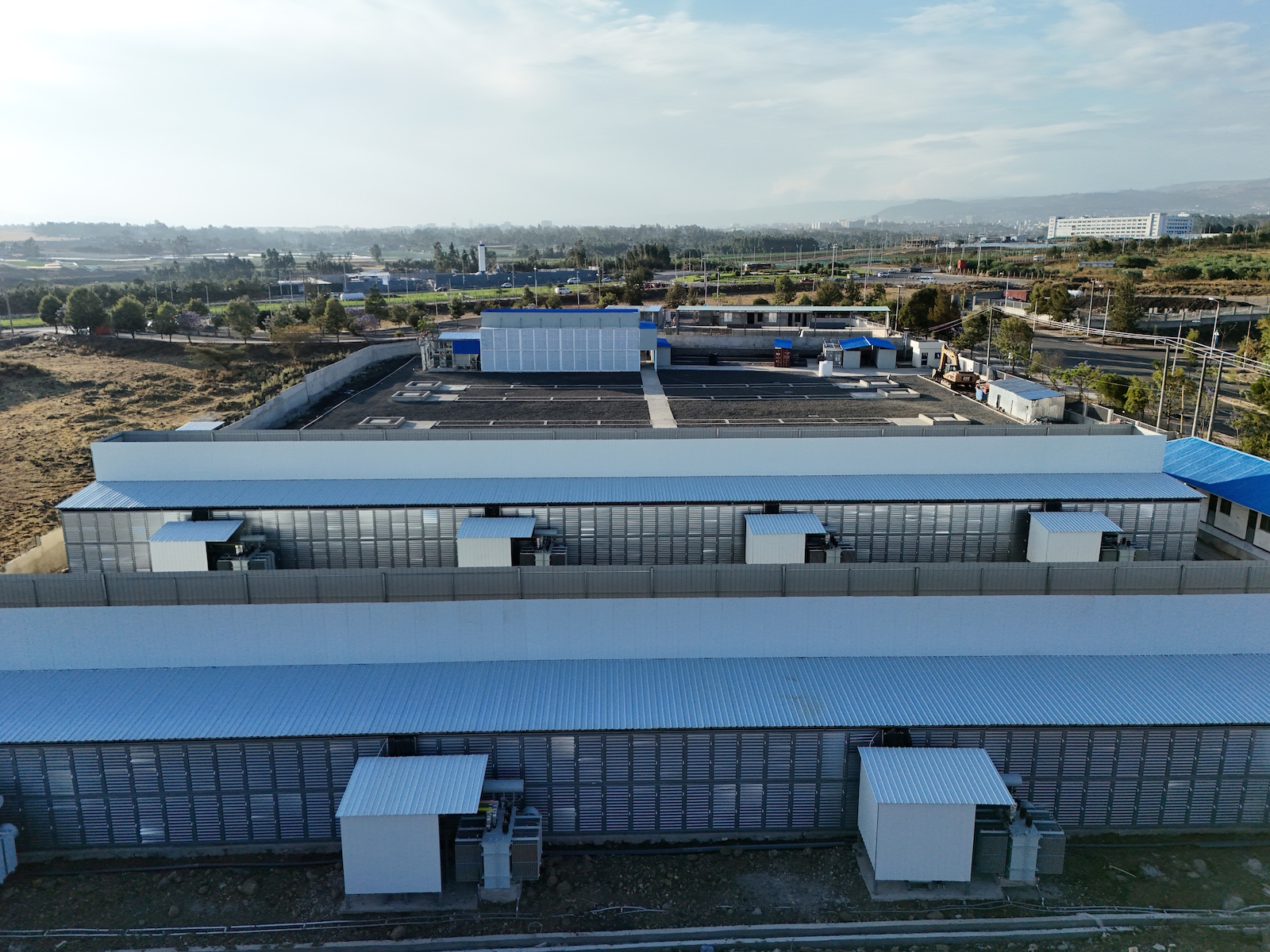
Such architecture also changes how society and authorities perceive crypto mining. It stops looking like a temporary phenomenon and becomes real infrastructure with a clear lifespan, residual value, and role in the regional energy balance.
This is not about image. This is about survival in an environment where every megawatt of load must be justified.
Own Generation (Usually Gas)
Another path is building your own generation — most often gas-fired. Formally it looks like an alternative to grid connection: you don’t occupy grid balance, don’t depend on its regimes, and avoid classic regulation.
But this independence is relative. Own generation is not simpler or cheaper. Capital costs, construction timelines, and operational complexity are comparable to full grid connection — and in some aspects even higher.
Gas requires constant maintenance, fuel logistics, backup systems, emissions control, and technical risk management. Approvals may be faster, but you take 100 % of the responsibility onto yourself.
In this model you become a separate energy system with your own failures, peaks, economics, and limitations. You concentrate all the complexity inside the project instead of sharing it with the grid.
Own generation is a parallel, viable, sometimes the only possible scenario. But it demands the same engineering thinking, long-term horizon, and readiness to live without grid guarantees.
What Matters in the End
Grid connection remains the most reliable source of energy for crypto mining. It is complex, slow, and demanding. In return it gives what autonomy cannot: systemic stability, scalability, and integration into a long-term energy future.
Crypto mining can no longer be a parasitic load and expect to survive long-term. It must either become real infrastructure — or remain temporary and disappear.
The most sustainable mining projects of the future will look like heavy, seemingly oversized infrastructure facilities. They take longer to build and cost more upfront. But they do not vanish at the first change in regime, tariff policy, or public pressure.