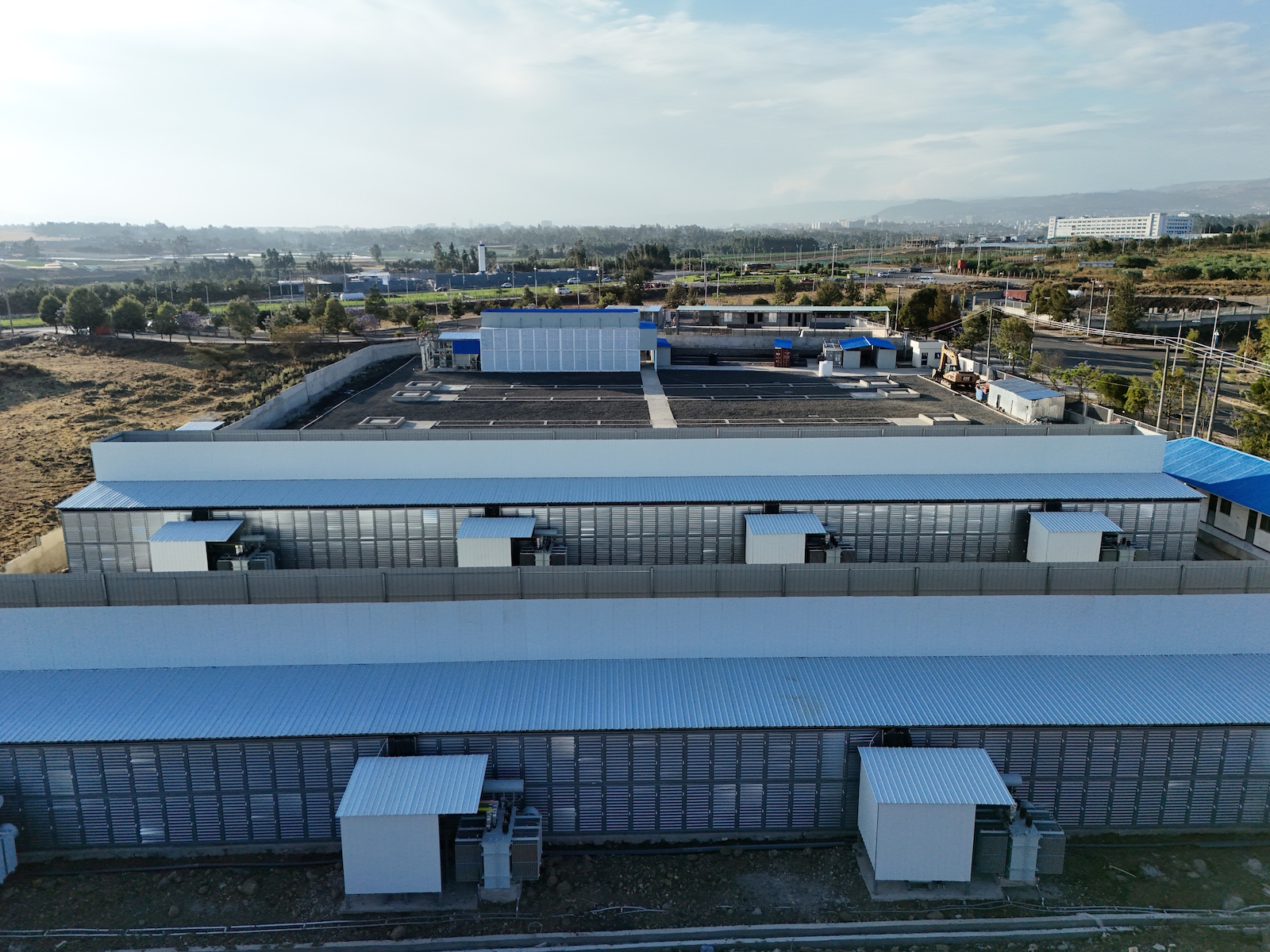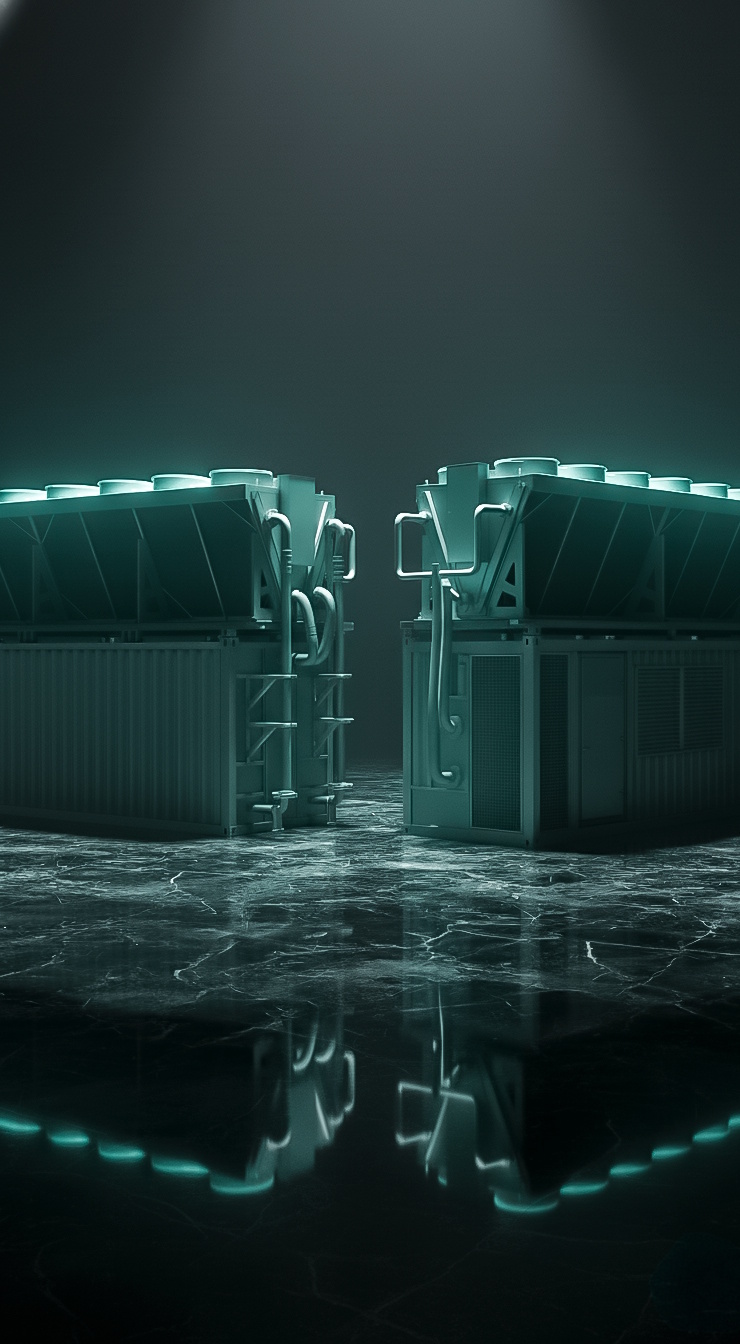
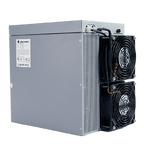
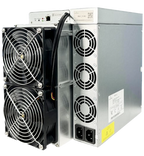
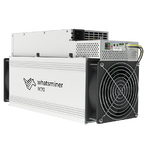
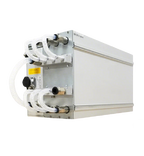
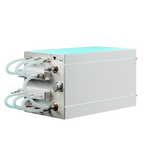
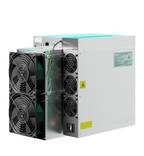

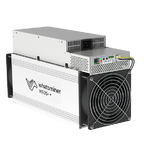
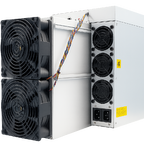
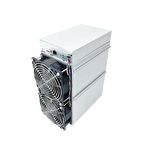
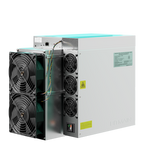
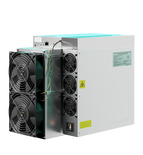
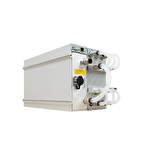
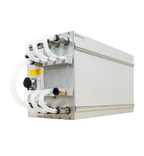
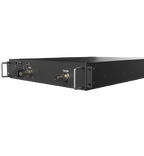
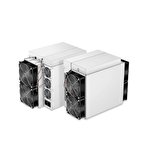
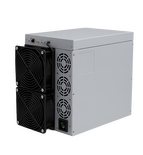
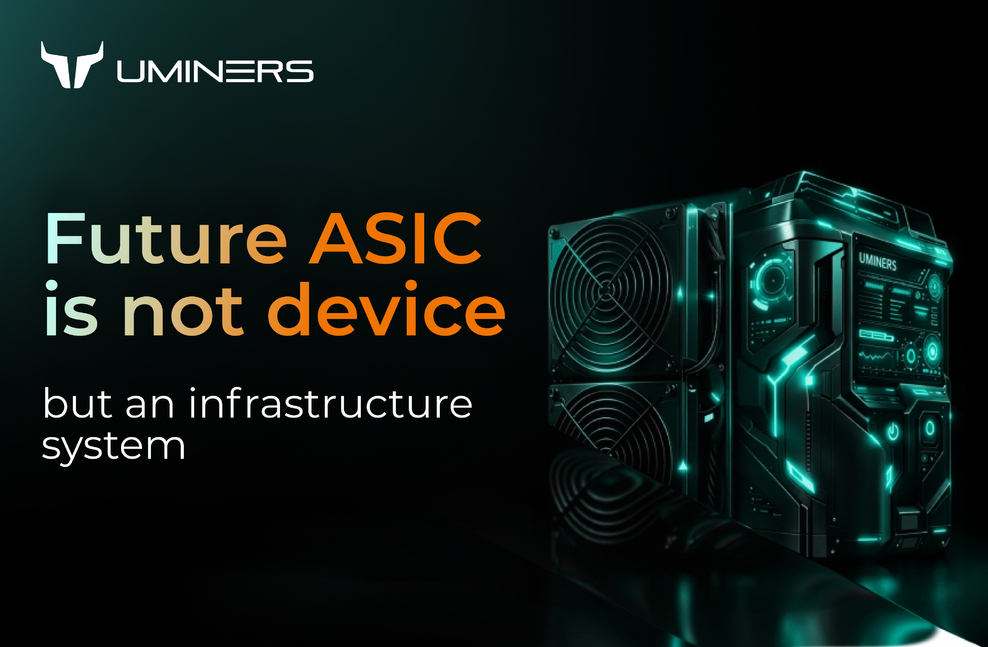
At Uminers, we set out to imagine what the future ASIC would look like if we stopped viewing it as just another piece of hardware and started treating it as part of critical infrastructure.
We deliberately avoided speculation about sudden technological breakthroughs. Instead, we focused on what is already visible in engineering trends, real-world operations, and the economics of large-scale mining clusters. From our perspective, the future ASIC is the result of gradual evolution — where form factor, operating modes, serviceability, and energy management matter more than headline efficiency numbers. Its value is no longer defined at launch, but over its entire lifecycle.
Why the Race for J/TH Is Slowing Down
The future ASIC is no longer being shaped by the simple logic of “lower J/TH at any cost.” That race is approaching its natural limits.
Physics, silicon economics, and thermal constraints are making each incremental efficiency gain smaller, more expensive, and more fragile. The market is now operating around the 10 J/TH threshold, with some configurations publicly discussed below that level — down to 9.8 J/TH. Just a few years ago, these figures looked like theoretical limits. Today, they appear in specifications and engineering discussions.
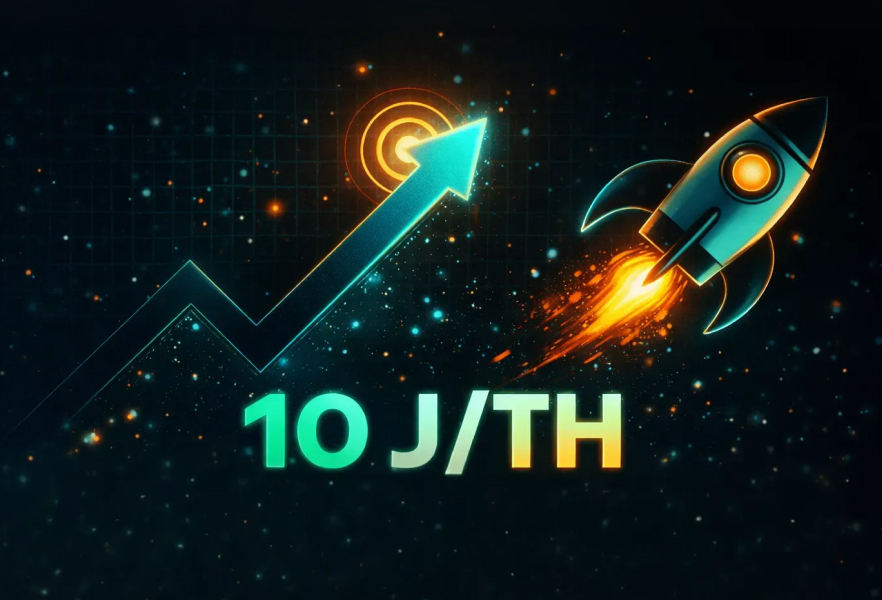
But this is exactly where progress begins to slow. Each marginal improvement requires increasingly precise control over silicon, power delivery, and thermal behavior. The cost of failure grows faster than the efficiency gain itself. Improvements become less visible on charts, yet significantly more expensive to manufacture and operate.
This marks the end of dramatic generational leaps. The future of ASIC mining will not be driven by revolutions, but by careful iteration — where economic performance is defined not by peak efficiency, but by how long and how reliably a device operates under real-world conditions.
Form Factor Becomes Infrastructure
As energy efficiency gains flatten, physical design and infrastructure integration move to the forefront.
In our view, future ASICs will not converge into a single universal enclosure. Instead, they will evolve into standardized form factors optimized for specific environments. Air cooling, liquid cooling, and immersion systems each demand their own geometry, density, and integration rules.
Over time, stable standards will emerge within each cooling category — enabling operators to design racks, power distribution, and maintenance workflows independently of any single manufacturer. This mirrors the evolution of the server industry, where standardized form factors and airflow rules unlocked predictability and scale.
ASICs are following the same path. The same compute module will increasingly be deployed across multiple standardized enclosures. What matters is no longer a unique device design, but how well the system fits its operating environment.
This shift lowers integration costs, simplifies operations, and reduces dependency on fragmented, incompatible hardware ecosystems. Mining infrastructure begins to behave like mature industrial infrastructure — disciplined, standardized, and predictable.
From Products to Platforms
As form factors and architectures stabilize, ASICs stop being short-lived products and start becoming platforms.
Architectures will persist longer. Value will be extracted through firmware updates, tuning, selection, and system-level improvements rather than constant full replacements. Model updates may happen more frequently, but changes will be incremental. Lifecycles will grow longer.
The difference between ASIC generations will no longer be defined by marketing claims, but by stability, predictability, and service life under sustained load.
Reliability Over Peak Performance
As ASICs become infrastructure assets, real-world operation overtakes lab benchmarks.
Future ASICs will be judged less by launch specifications and more by how they behave over time. Continuous operation, predictable failure modes, and fast recovery become critical — because uptime defines actual profitability.
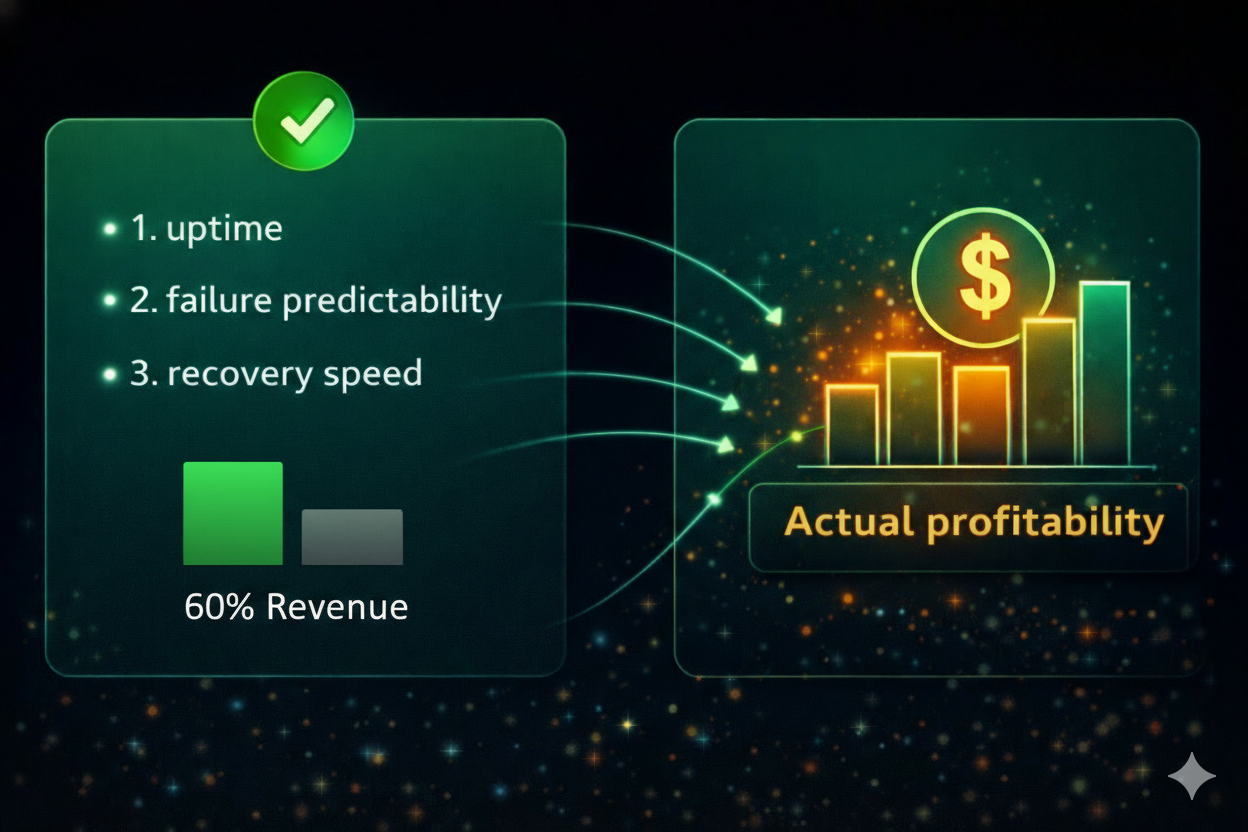
At industrial scale, downtime costs more than marginal differences in J/TH. This fundamentally changes how devices must be designed.
The future ASIC is built for maintenance, not replacement. Modularity, on-site repair, and clear diagnostics become baseline requirements rather than optional features. A device that can be quickly restored without disassembly or long logistics chains often delivers better economics — even if its nominal efficiency is slightly lower.
Reliability stops being an abstract quality and becomes a measurable financial metric.
Energy as a Control Variable, Not a Constant
As reliability expectations rise, energy management becomes central.
Future ASICs will no longer operate at a single fixed point. Power consumption, hash rate, and efficiency become adjustable ranges, allowing operators to tune behavior based on grid conditions, electricity pricing, and operational priorities.
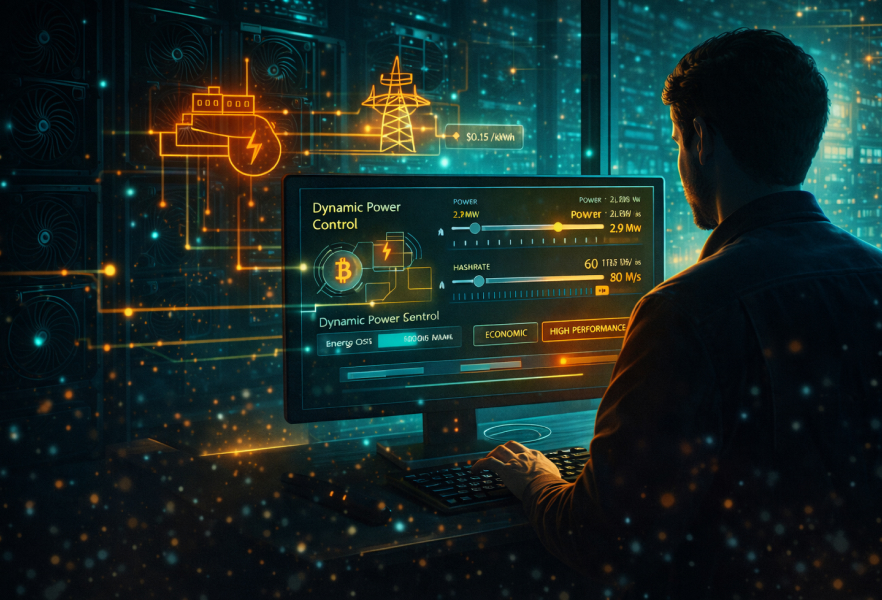
This transforms mining into a flexible participant in energy markets. Instead of passively consuming power, ASICs can:
reduce load during grid stress,
shift into efficiency modes when energy prices rise,
ramp performance when power is abundant and cheap.
Value is extracted not only from computation, but from load control itself.
To support this, ASICs must be designed for smooth transitions between operating states, stable performance off nominal points, and protection against degradation under variable loads. Power management becomes native, not manual.
In this model, the winners are not those who push maximum output in a single mode, but those who treat energy as a dynamic variable and integrate mining into broader energy system architectures.
ASICs as Long-Term Infrastructure Assets
As ASICs integrate deeper into infrastructure and energy systems, evaluation criteria change.
Future ASICs will be treated as long-term infrastructure assets with defined lifecycles, residual value, and management requirements — not short-lived tools for immediate extraction.

Total cost of ownership becomes the primary metric. Stability, predictability, and adaptability outweigh record-breaking specifications. ASICs that operate reliably for years, recover quickly from faults, and fit standardized infrastructure environments outperform more aggressive but fragile designs.
This final shift brings mining closer to professional computing industries governed by regulations, SLAs, and system-level management — rather than enthusiast setups and fragmented deployments.
The Uminers Perspective
From the Uminers perspective, this is where the market is heading.
Not toward another numbers race, but toward maturity.
Not toward short-term optimization, but toward time-based management.
Not toward devices — but toward systems.
And it is in this evolution that we see the future of Bitcoin mining.