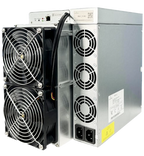
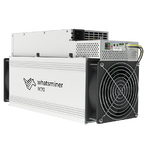
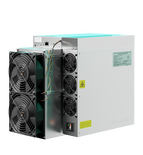
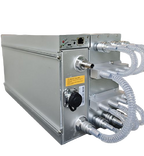
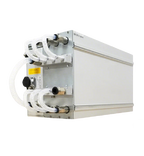

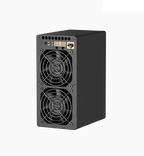

In mining, results are still commonly explained by a single variable - the price of Bitcoin.
BTC goes up - the project is “successful.”
BTC goes down - “the market is to blame.”
This is an oversimplification. In practice, engineering decisions have a stronger and more stable impact on ROI than the price of BTC.
BTC price does not depend on the operator, moves in cycles, and affects everyone equally. Engineering depends on the project’s architecture, determines real uptime, defines how many hours the equipment actually runs, and sets the true cost per hash.
Where Engineering Turns Directly Into Money
Uptime
Even an extra 1–2% of real uptime across a large mining fleet delivers an effect many underestimate. This is not about nice numbers in a presentation - it’s about hundreds or thousands of additional operating hours per year.
At scale, that directly translates into months - sometimes even a full year - difference in payback time for the same project with the same ASICs and the same power price.
MTTR (Mean Time to Repair)
Reducing MTTR on a large fleet means equipment returns to production not “someday,” but while the economics still matter. Every hour saved on repair and recovery turns directly into mined hash and realized revenue.
This is especially critical during peak periods, when margins are highest and downtime is most expensive. Fast recovery reduces the risk of cascading failures and prevents local issues from turning into systemic losses.
This is not a management abstraction. MTTR is a hidden ROI variable the market does not compensate for — and that cannot be “made up” by a rising BTC price.
Cooling and Thermal Design
Overheating and constant thermal cycling directly affect mining economics. They accelerate chip degradation, increase failure rates, and quietly shorten the real service life of ASICs.
These effects rarely show up immediately - more often they accumulate over months and then surface as higher failure rates and declining real uptime.
A properly engineered thermal model and stable cooling deliver an impact that is hard to overstate. At scale, this approach often produces a stronger and more sustainable economic result than a short-term 10–15% BTC price rally - because it works every single day over the entire lifecycle of the equipment.
Power Infrastructure and Power Quality
Voltage drops, phase imbalance, poor connections, and electrical noise increase PSU and board failures, cause intermittent faults, and create hidden downtime. Over time, this drives MTTR higher and makes operations unstable.
These problems don’t show up on BTC price charts and don’t make headlines, but they directly hit project financials, quietly but systematically reducing real ROI.
Conclusion
Bitcoin’s price follows its own rules. It can rise or fall at any time, miss a project’s payback window, and fail to “save” a site if its technical foundation is weak.
Basing a strategy on price alone means accepting a risk you cannot control.
Engineering works differently. Engineering decisions stay with the project for its entire lifecycle and generate value regardless of market phase. That’s why long-term resilience is built on engineering, not on waiting for favorable price moves.
BTC price influences the result - but engineering determines whether that result will be realized at all.